
A few weeks ago we walked through how end-of-service gratuity is calculated under UAE Labour Law. That post answered the first question every leaving employee asks: how much am I owed?
This one answers the question that comes next, often only after the lump sum has already landed in your account: now what?
For most UAE residents, the gratuity payout is the largest single transfer they will ever see hit their personal bank account. It also arrives without any structure attached to it. There is no withholding, no automatic pension wrapper, no compulsory savings layer. It arrives, it sits there, and it competes with every line item in your life.
What follows is not a recommendation about what you should do with your gratuity. That depends on your circumstances, your home country tax position, your family obligations, and your goals, and it is a conversation for a licensed advisor. What follows is a clear description of the categories of options UAE residents commonly consider, what the law actually says, and the practical steps worth taking before any decision is made.
Before you spend a dirham, confirm what you actually got
Step one is the boring one, and it is the one most people skip.
Under Federal Decree-Law No. 33 of 2021 (the UAE Labour Law that took effect on 2 February 2022), end-of-service gratuity is calculated on basic salary only. Allowances for housing, transport, utilities, and furniture are excluded. For employees with one to five years of continuous service, gratuity accrues at 21 days of basic salary per year. From year six onward, the rate increases to 30 days of basic salary per additional year. The total cannot exceed two years of total wages, and the daily basic wage is calculated by dividing your last basic monthly wage by 30.
Three things are worth checking against your final settlement before you treat the money as yours to plan with:
- Was the calculation done on basic salary, not gross? Online discussions among UAE employees frequently raise this point. The structure of your salary matters: a package built with a low basic salary and large allowances will produce a smaller gratuity than the same total package built with a higher basic salary, because allowances are excluded from the calculation. If your settlement was calculated using gross salary instead of basic, the figure is overstated; if it was calculated using a basic salary lower than what your contract specifies, the figure is understated. Both are worth questioning.
- Did the employer pay within the statutory window? The UAE government portal is clear: all outstanding wages, entitlements and gratuity must be paid within 14 days of the end of the contract. Knowing that date makes it straightforward to confirm the settlement arrived on time. If a payment does run late, the MOHRE complaint process and licensed labour-law counsel are both options employees may wish to review.
- Are there any deductions you do not recognise? Loans against future commission, training cost clawbacks, notice-period offsets, and unpaid-leave adjustments can all reduce the figure. Each should be itemised. Unexplained deductions are usually worth raising with HR before any acknowledgement is signed.
If anything in the settlement looks unclear, asking for clarification before signing the acceptance is generally easier than disputing it after the funds have cleared.
The four broad categories of options people consider
Once the gratuity is in the bank and reconciled, residents usually think about it in one of four ways. None of these is a recommendation. They exist; people use them; the trade-offs are worth understanding.
Spending
Some portion of every gratuity payout is consumed. Final-month rent overlap when moving, flights home, shipping, settling outstanding credit-card balances, school-fee top-ups for the next term, the cost of relocating a family. These are real costs and they are often what the gratuity ends up funding by default.
The watchout is the difference between intentional spending and ambient spending. A lump sum that is not earmarked for anything specific tends to disappear in increments small enough that none of them feel like a decision.
Saving in cash
The simplest option is to leave the money in a UAE savings account or a fixed deposit. UAE banks offer profit-paying savings products, and the central-bank rate environment has made fixed deposits more attractive over the last two years than they were for most of the previous decade.
The trade-off is twofold. Cash held in dirhams is exposed to your home-country exchange rate over time, and savings rates may not keep pace with inflation in the cost categories you actually spend on, especially housing and schooling.
Repatriating and investing or saving offshore
For expats whose plans involve eventually leaving the UAE, the gratuity often gets sent home or to an offshore account. The mechanics matter here. Remittance fees, exchange-rate spreads, and home-country tax treatment can all eat into the payout. The cheapest provider for a small monthly transfer is often not the cheapest for a single five- or six-figure transfer, and the order in which transfers happen can matter for tax-residency reasons in some jurisdictions.
This is an area where licensed home-country tax or financial advice is commonly valuable before any transfer rather than after.
Investing while staying in the UAE
A growing set of UAE-licensed and DIFC- or ADGM-licensed platforms allow residents to hold investment and savings products locally. Availability, suitability, fees, and the regulator overseeing each provider all vary, and the right comparison is between specific products from licensed providers, not between abstract categories.
The honest framing here is that UAE residency does not give anyone an automatic edge in investing. Currency exposure, fund domicile, and reporting obligations to a future home country all need to be understood before money goes in, not after. Past returns published by any provider are historical and not guaranteed, and product comparisons are best done with a licensed financial advisor rather than from a blog post.
The voluntary alternative end-of-service savings scheme
For gratuity already paid, the categories above are the practical map. For future gratuity, there is a separate development worth understanding.
In 2023, the UAE Cabinet introduced the Voluntary Alternative End-of-Service Benefits Savings Scheme through Cabinet Resolution No. 96. Instead of an employer holding the gratuity liability on its own balance sheet and paying a lump sum at termination, an enrolled employer transfers monthly contributions into a regulated investment fund managed by an approved provider.
The contribution rates mirror the existing gratuity formula: 5.83% of basic monthly salary for employees with under five years of service, and 8.33% for employees with more than five years. Payments must reach the investment fund within 15 days of the start of each month. Employees can also make voluntary additional contributions of up to 25% of their annual salary, and unlike the employer's mandatory contributions (which can only be drawn at end of service), voluntary employee contributions can be withdrawn at any time during active employment.
A small number of investment fund providers have been approved under the scheme. As of recent reporting, that list has included Lunate, First Abu Dhabi Bank, Daman Investments, and National Bonds. The current approved-provider list is published on the official MoHRE scheme page; employees and employers should refer to that page for the up-to-date roster. Within those funds, providers offer a range of risk-graded portfolios and Shariah-compliant options.
Two important pieces of context for 2026:
- The scheme remains voluntary for mainland private-sector employers; uptake is one of the issues the consultation addressed.
- MoHRE ran a public consultation on the scheme that closed in February 2026. The government has not formally announced a mandatory mainland rollout, and any such change should be confirmed against official MoHRE communications rather than assumed. The legal-update note from Morgan Lewis covers the consultation in detail.
There is a precedent worth knowing about. Since 1 February 2020, employees in the Dubai International Financial Centre (DIFC) have been enrolled in a similar scheme called DEWS, which uses the same 5.83% / 8.33% contribution structure. DIFC reported in 2024 that DEWS had surpassed USD 1 billion in assets. The scheme operates with an independent master trustee, a plan administrator, and underlying fund managers, and offers a range of risk-graded portfolios including Shariah-compliant options. DIFC publishes the current administrator and fund-manager roster on its official site.
For employees, the structural difference between the traditional gratuity and these schemes is straightforward: under the traditional system, the employer carries the liability and pays a lump sum at the end. Under the savings-scheme model, the money is segregated in a regulated fund from month one, and what you receive at the end depends on contributions plus investment performance.
Whether either model is better for any given individual depends on the employer's financial stability, the employee's investment time horizon, and the underlying fund choice. Those are conversations to have with a licensed financial advisor, not to settle from a blog post.
Common mistakes worth avoiding
Across the discussions of gratuity payouts in UAE expat communities over the last month, the same patterns repeat:
- Treating the gratuity as found money. A lump sum that arrives without a plan tends to leave the same way. Even a one-page sketch of where the money is going (rent overlap, flights, debt clearance, savings reserve) makes intentional spending easier to defend later.
- Forgetting the bank-account closure timeline. If you are leaving the UAE, your salary account often needs to remain open until the gratuity clears. Closing it the week of departure can leave the payment in limbo. Coordinate the timing with HR before you book the flight.
- Underestimating home-country tax treatment. UAE has no personal income tax. Many home countries do, and gratuity received during a year of tax residency in another jurisdiction may be treated differently from gratuity received before relocation. This is a question for a tax advisor in your home country before the funds move.
- Mixing the gratuity into the day-to-day account. Once it lands alongside your salary, it stops looking like a one-off payment and starts looking like a balance to spend from. Some people use a separate savings or holding account to keep the lump sum visible and easier to track.
- Not checking eligibility for the voluntary scheme. If your current employer has enrolled in the alternative savings scheme, the structure of how you accumulate future gratuity is meaningfully different. Asking HR is one straightforward way to confirm, particularly when reviewing a new contract.
Where Clarvia helps
The piece of work nobody enjoys is reconciling a final settlement against what the law says you were owed, then projecting what the after-rent, after-flights, after-tax balance actually is.
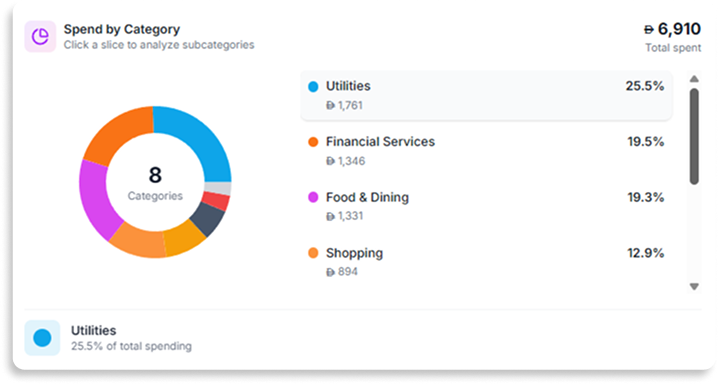
Clarvia is built for that. Upload your final payslip and bank statements, and the platform categorises the inflows and outflows automatically, separates one-off payments like gratuity from recurring income, and lets you compare scenarios such as debt-repayment timing, holding cash, offshore transfer costs, or longer-term allocation choices. The point is not to make the decision for you. The point is to make the trade-offs visible.
Start your free trial and organise your gratuity alongside your income, expenses, and planned obligations in one place.